
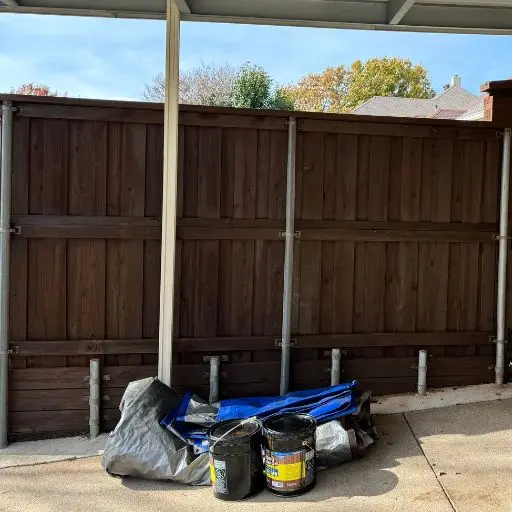
Fence Staining in Flower Mound, TX
Protect your investment and restore your fence's beauty. Professional staining extends fence life, prevents weathering, and brings back that fresh-built look.
Professional Fence Staining Services
UV & Weather Protection
Quality stains block UV rays that gray wood and contain water repellents that prevent rot and warping.
Color Options
Natural cedar tones, rich browns, weathered grays, or custom colors. Semi-transparent to solid coverage.
Proper Preparation
We clean, sand if needed, and ensure wood is properly dried before applying stain for best adhesion.
Commercial-Grade Products
We use professional-grade stains from brands like Behr, TWP, and Ready Seal — not consumer products.
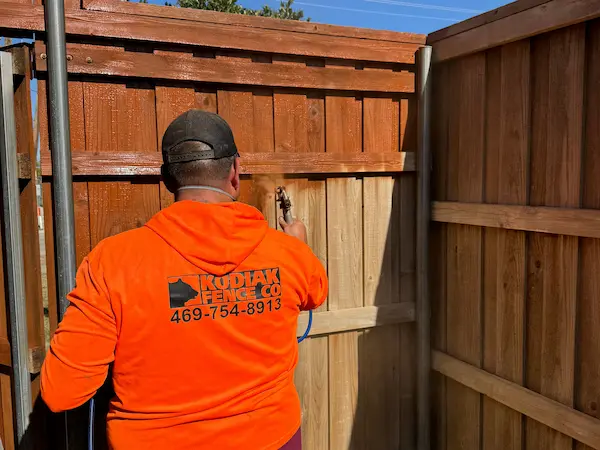
Professional Fence Staining in Flower Mound
A quality stain does more than make your fence look good — it protects your investment from the Texas sun, rain, and humidity that break down unprotected wood. Without protection, cedar fences turn gray in 6-12 months and begin deteriorating from UV damage and moisture absorption.
We provide professional fence staining using commercial-grade products applied properly. Our process ensures deep penetration and long-lasting protection. No surface coats that peel in a year.
Why Hire a Fence Staining Contractor?
- UV Protection: Blocks the sun rays that cause wood to gray, crack, and deteriorate. Critical in Texas where fences get intense sun exposure.
- Water Resistance: Quality stains repel water, preventing the moisture absorption that causes rot, warping, and mold growth.
- Extended Fence Life: Regular staining can add 5-10 years to your fence's lifespan — a significant return on a modest investment.
- Enhanced Appearance: Bring out the natural beauty of cedar grain. Choose from natural tones to rich colors.
- Property Value: A well-maintained fence improves curb appeal and signals to buyers that the property is cared for.
Our Professional Staining Process
-
1
Inspection
Assess fence condition. Identify repairs needed — loose boards, damaged posts, protruding nails. Staining won't fix structural issues.
-
2
Cleaning
Remove dirt, mildew, old stain residue, and debris. For gray fences, we may use wood brighteners to restore natural color.
-
3
Drying
Allow proper dry time — typically 24-48 hours depending on weather. Staining wet wood prevents penetration and causes peeling.
-
4
Application
Professional airless spray equipment ensures even coverage on all surfaces — both sides of pickets, rails, posts, and caps.
-
5
Quality Check
Inspect for missed spots, drips, or inconsistencies. Touch up as needed. Final walkthrough with you.
Fence Staining Options & Types
Semi-Transparent Stain
Most popular choice. Shows natural wood grain while adding color and protection. Natural cedar tones most common.
Best for: New or good condition wood
Semi-Solid Stain
More color, some grain still visible. Good for hiding minor imperfections while maintaining a wood look.
Best for: Slightly weathered wood
Solid Stain
Full coverage like paint, but penetrates like stain. Hides wood imperfections. Available in many colors.
Best for: Older, weathered, or repaired fences
Clear Sealer
UV protection without color change. Preserves natural wood appearance. Allows natural silver-gray aging.
Best for: Those who want natural weathering
Popular Fence Stain Colors
- • Natural Cedar: Enhances wood's natural tone. Most popular for cedar fences.
- • Cedar Tone / Redwood: Warmer, reddish-brown tone.
- • Honey Gold: Light golden-brown, shows grain beautifully.
- • Dark Walnut / Chocolate: Rich, darker brown for contrast.
- • Weathered Gray: Modern look, mimics natural aging.
- • Custom Colors: Match existing structures or landscaping.
When to Stain: New Fence vs Restaining
New Fence Staining
- Wait 3-6 months after installation
- Wood needs to dry and "open up"
- Test with water droplet — should soak in, not bead
- Fall is often ideal timing
Re-Staining Schedule
- Every 2-4 years in North Texas
- South/west facing needs more frequent
- When water stops beading on surface
- When color has significantly faded
What Your Staining Contractor Should Quote
When hiring a fence staining contractor in Flower Mound, here's what affects pricing:
- • Linear footage: Total fence length
- • Fence height: 6ft vs 8ft
- • Fence style: Board-on-board takes more stain than side-by-side
- • Condition: New, weathered, or previously stained
- • Prep required: Cleaning, repairs, old stain removal
- • Stain type: Product quality and coverage
- • Access: Gates, obstacles, landscaping
Stain vs Paint for Fences
We always recommend stain over paint for wood fences. Here's why:
- • Stain penetrates: Becomes part of the wood, won't peel or flake
- • Paint sits on top: Creates a film that eventually cracks and peels
- • Stain breathes: Allows moisture to escape, preventing rot
- • Paint traps moisture: Can accelerate wood deterioration
- • Stain ages gracefully: Fades slowly, easy to recoat
- • Paint requires scraping: Must remove old paint before repainting
Professional Staining Benefits
- • Proper prep ensures stain lasts 3-4 years, not 1
- • Professional spray equipment = even coverage
- • Both sides of fence treated, including the back
- • No streaks, drips, or missed spots
- • Completed in 1-2 days, not multiple weekends
- • Commercial-grade products, not big-box store stains
Our Fence Staining Process
Inspection
Assess fence condition and repairs.
Color Selection
Choose stain type and color.
Power Cleaning
Remove dirt, mildew, and old stain.
Drying Time
Allow wood to dry thoroughly.
Masking
Protect plants and surfaces.
Stain Application
Professional airless spray equipment.
Back Coat
Stain both sides for full protection.
Quality Check
Inspect and touch up as needed.
Common Questions About Fence Staining
New cedar fences should dry 3-6 months before staining to allow the wood to open its pores and release moisture. Staining too soon prevents proper penetration and can cause peeling.
In North Texas, most fences need re-staining every 2-4 years depending on sun exposure and stain quality. South and west-facing sections may need more frequent attention.
Stain penetrates the wood and allows it to breathe, while paint sits on top. Stain is generally better for fences because it doesn't peel and shows wear more gracefully.
Yes, with proper preparation. We clean the fence, may use brighteners to restore the wood, and ensure it's dry before staining. Results vary based on wood condition, but most fences can be restored.
Yes. While staining costs less than a new fence, we still offer payment options for larger projects. Bundling staining with fence installation or repairs can also save you money.
Other Fencing Services in Flower Mound
Explore our full range of fence installation and services.
Ready for Your
Fence Staining?
Get a free, no-obligation quote. We'll visit your property, measure everything, and give you honest pricing — usually within 24-48 hours.